Why Does Mold Keep Coming Back After Remediation?
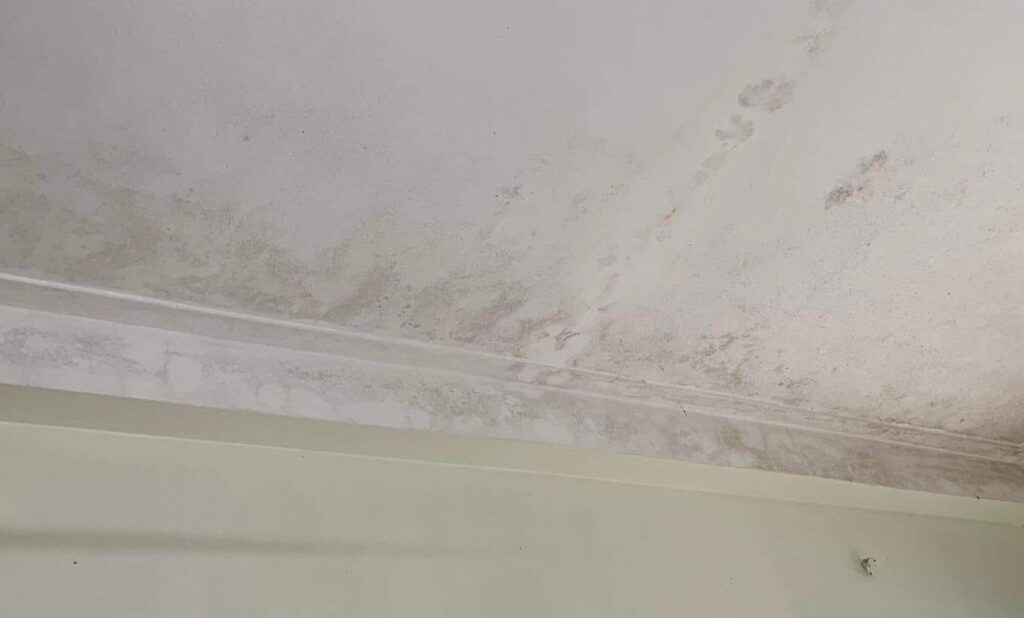
Whenever humid weather or water ingress occurs, mold thrives on walls, drywall ceilings, and wooden furniture. The natural reaction for most property owners is to seek immediate solutions to restore aesthetics.
However, relying on intuition without understanding Indoor Environmental Quality (IEQ) principles and Building Science often leads to unintentional spore dissemination, resulting in rapid recurrence. Below are the 4 most common technical mistakes in conventional mold removal:
1. Over-reliance on Chlorine Bleach or Chemical Whiteners
- Conventional Practice: Spraying chlorine-based solutions on affected surfaces until black spots fade, assuming the mold is eliminated once the surface looks white.
- Scientific Reality: Household bleach consists mostly of water. While chlorine evaporates quickly after bleaching surface pigments, water penetrates deep into porous drywall and plaster. The roots of the mold (Mycelium) embedded inside are not fully killed; instead, they receive moisture to regrow rapidly.
2. Dry Brushing or Dry Wiping Mold Growth
- Conventional Practice: Using dry brooms, stiff brushes, or dry cloths to scrub off mold patches from wall surfaces.
- Scientific Reality: Dried mold structures are extremely fragile. Mechanical friction shatters mold colonies into millions of microscopic spore fragments. These lightweight bioaerosols remain airborne for prolonged periods, posing severe respiratory hazards when inhaled.
3. Uncontrolled Ventilation and Free Fan Blowing
- Conventional Practice: Opening doors and pointing fans outward under the assumption that air currents will push mold dust completely out of the room.
- Scientific Reality: Standard household fans generate turbulent airflow eddies in enclosed spaces rather than directional exhaust. This turbulence disperses airborne spores, causing them to adsorb onto porous surfaces like curtains, sofas, carpets, and bedding. Once doors are closed, these bioallergens remain trapped indoors.
4. Treating Surface Mold While Ignoring Moisture Sources & Waterproofing
- Conventional Practice: Cleaning visible mold spots without diagnosing the underlying cause of moisture accumulation.
- Scientific Reality: Mold growth is merely a symptom; moisture is the root cause. Without addressing exterior wall seepage, plumbing leaks, or thermal bridging condensation, any surface cleaning effort remains temporary.
PVHC Holistic Mold Remediation & IEQ Solutions
To manage biological hazards sustainably and protect indoor air quality, PVHC Indoor Air Solution implements an integrated protocol aligned with international Building Science standards:
- Root-Cause Moisture Diagnostics: Utilizing specialized moisture meters and thermal imaging cameras to pinpoint exact moisture intrusion points (exterior seepage, pipe leaks) and execute waterproofing prior to remediation.
- Physical Removal via HEPA Extraction: Avoiding dry brushing completely. Deploying commercial HEPA vacuum systems to capture 99.97% of mold spores and debris, preventing cross-contamination to adjacent zones.
- Safe Biofilm Decontamination: Applying specialized microbial solutions to soften and detach the structural biofilm without degrading substrate integrity.
- Microclimate & Moisture Control: Mold requires relative humidity (RH) above 60% to germinate. PVHC integrates climate control strategies to maintain RH within 45% – 55%, permanently depriving mold of its growth conditions.
Scientific References
- U.S. Environmental Protection Agency (US EPA): Mold Remediation in Schools and Commercial Buildings (EPA 402-K-01-001).
- IICRC S520 Standard: Standard and Reference Guide for Professional Mold Remediation.
- ASHRAE: Indoor Air Quality Guide: Best Practices for Design, Construction and Commissioning.